Our veterinary services include:
Our vets and veterinary nurses can manage a wide range of conditions, but should your pet require more specialist care, then we can arrange this for you. With Wentworth Falls Animal Hospital on hand, you can always rest assured that your pet will be well looked after.
Congratulations! Welcome to the wonderful world of owning a beloved puppy or kitten. Wentworth Falls Animal Hospital has fantastic services to help you understand how to best keep your fur baby happy and healthy. At Wentworth Falls Animal Hospital, we recommend you visit one of our qualified and caring veterinarians in the first few weeks so that your puppy or kitten can have the very best start possible.
At your puppy or kitten consultation, your vet will discuss the following:
A new puppy is a wonderful experience, and having a good, positive start is
vitally important.
At Wentworth Falls Animal Hospital, our Puppy School sessions are run in two
age groups. For puppies aged 8-16 weeks, puppy preschool will run for one
night a week for 5 weeks. This course is lead by our enthusiastic nurse
Phoebe. The first week is an introduction session with no puppies present, and
the following four weeks the puppies learn basic commands and socialisation in
a safe, friendly and happy environment. For puppies aged 4-6 months, the
sessions run one night a week for 5 weeks, with no puppies present in the first week, and is taken by Certified
Professional Dog Trainer and nurse Nicky. In these sessions more emphasis is
concentrated on commands and trouble shooting problem behaviour. All puppies
must be health-checked and up-to-date with their vaccinations.
Our trainers only use positive reinforcement methods to help set your puppy up to succeed.
The aim of puppy school is to help our clients develop a wonderful bond with
their puppy through training, and to create excellent doggie citizens for our
community.
At puppy school, you and your pup will get advice and information on:
Your puppy will also have a great time meeting others and getting lots of praise and love. Call us on 02 4757 3255 for bookings.
At Wentworth Falls Animal Hospital, Nicky Laws is also available for
consultations on specific animal behaviour training. Nicky is one of the
owners of Wentworth Falls Animal Hospital and has been a qualified veterinary
nurse for 20 years. Nicky has recently completed her Certificate 4 in
Companion Animal Studies and is a Certified Professional Dog Trainer and
Member of the Delta Institute.
For extra information on puppy training, we recommend a fantastic book called
Puppy Coach: Set Them Up To Succeed by extraordinary UK dog trainer, Jo Croft.
Jo's website also has some great information
At Wentworth Falls Animal Hospital, we know your pets are precious. There are some highly contagious and serious diseases that can be prevented with vaccinations. Your pet needs to be vaccinated annually to give them the best protection.
Puppies and kittens are vaccinated at:
Dogs (C5)
As adults, Parvovirus, Distemper and Infectious Canine Hepatitis (C3) vaccinations are given every three years after one year of age. Adult dogs still require annual vaccinations for Canine Cough. Dogs can also be vaccinated against Leptospirosis which is a serious disease transmitted by rats. Leptospirosis can be transmitted via contaminated water such as puddles and is a disease that can also be transmitted to humans. The initial course is two vaccinations given 2-4 weeks apart and then annually. The vaccine can be given at the annual health check along with other vaccines.
Cats (F3)
Cats can also be vaccinated against Feline Immunodeficiency Virus (FIV) with a course of three injections, and also Feline Leukaemia Virus (FeLV). This may be recommended in cats in multi-cat households and for cats who get into fights.
Rabbits
Rabbits can be vaccinated against Calicivirus every six months as recommended
by the AVA.
Ferrets
Ferrets can be vaccinated every year against Distemper
If your beloved pet goes wandering, it is vitally important that they can be
quickly and easily identified so that they can return home as soon as
possible. Microchipping is a very simple procedure where a small implant is
inserted under the skin. It can either be done during a consultation or under
general anaesthesia at desexing.
Microchipped animals are registered on the NSW Companion Animal Register. The
scanned number is linked to the information you supply. It is vitally
important to keep this information up to date.
The Companion Animals Act 1998 requires that all puppies and kittens are microchipped and registered with the local council. Lifetime registration with Blue Mountains City Council is a one-off payment. Please check this link for details.
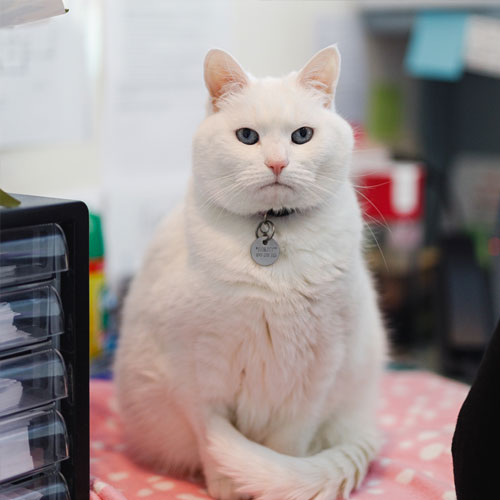
We generally recommend desexing your puppy or kitten at six months of age. Apart from preventing the birth of unwanted puppies and kittens, there are other diseases and unwanted behavioural issues that can be prevented. If you have any questions about the age of desexing your pet, especially some dog breeds, please discuss with the vet during consultations with your puppy.
Male Dogs
Desexing a male dog (castration) reduces the changes of
Male Cats
Desexing a male cat may control
Female Dogs
Desexing a female dog (spaying) can prevent
Female Cats
Desexing female cats prevents
At Wentworth Falls Animal Hospital, we care for your pet as part of your
family. We believe in offering the best possible care to support your animal
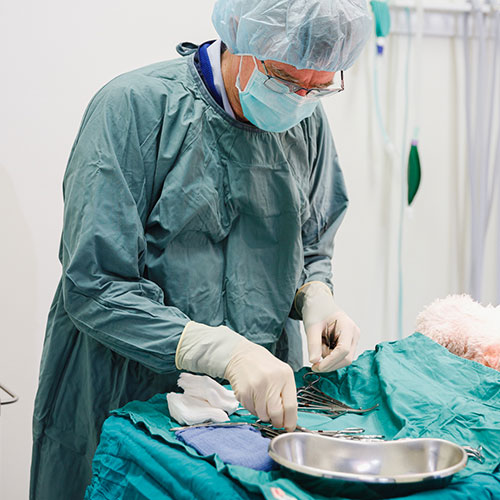
if they require a surgical procedure. Our care starts before surgery,
continues throughout the procedure and carries through to final recovery.
We have trained and experienced veterinary surgeons to handle a wide range of
surgical procedures. If there are more complicated surgeries required, for
example, orthopaedic surgery, we have an experienced visiting surgeon
available. We also have a number of exceptional specialist surgeons to refer
to.
At Wentworth Falls Animal Hospital, we know that understanding all the information you need to prepare for surgery can be a bit daunting. We recommend that you read through the steps and recommendations below prior to surgery day.
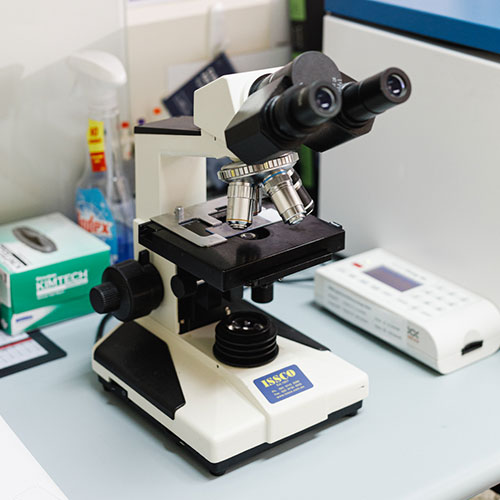
A pre-anaesthetic blood test is a blood test done before receiving a general
anaesthetic. Our state-of-the-art in-house laboratory facility provides us
with fast, reliable results. The test measures the levels of liver and kidney
enzymes, blood glucose, blood protein and red blood cell levels. These levels
can help the vet to ensure that your pet's organs are functioning properly.
This is important as the liver and kidneys are needed to process and eliminate
the anaesthetic. If there are any abnormalities with these levels, the vet
will discuss results with you prior to anaesthesia and surgery and discuss if
any changes will need to be made.
Intravenous fluids may also be recommended during a general anaesthetic for your pet. Supportive fluids are given intravenously via a constant rate of the infusion pump to help support circulation during anaesthesia and thus assist the kidneys and liver to process and eliminate the anaesthetic.
Dental health is just as important for our pets as it is for ourselves. Not only do we aim to keep the teeth and gums healthy and prevent bad breath, but we also want to prevent more serious complications of poor oral health. These include serious infections that can lead to long-term problems of the body’s internal organs like the kidney, heart and liver. Not to mention, there is chronic pain associated with some oral diseases.
You may notice that your pet shows one or more these signs
At every annual checkup, your vet will be able to help assess the status of your pet's oral health and discuss a plan for prevention and treatment. If you are unsure, our nurses offer a free dental health check consultation. Just call 02 4757 3255 for more information.
If dental treatment is required, the work is done under a general anaesthetic so that proper attention is given and the teeth may be cleaning with an ultrasonic scaler and polisher. We also have a specialised dental X-ray to help diagnose problems that can lurk beneath the surface such as root fractures, abscesses and problems with the jaw bone. To prepare for the dental treatment, please check our steps to prepare for a general anaesthetic.
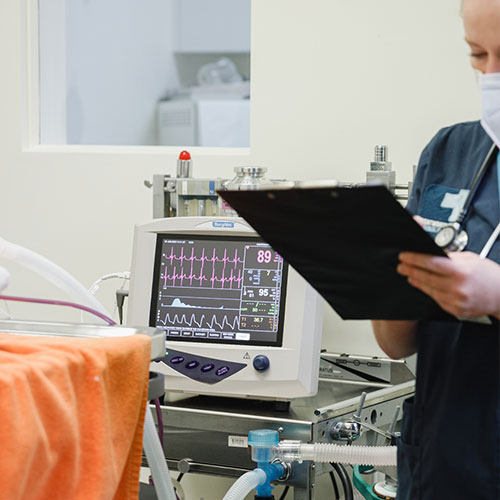
At Wentworth Falls Animal Hospital, we understand that time is precious. Our extensive in-house laboratory facility provides us with the capacity to run tests such as
This enables us to get results more quickly for a faster diagnosis and action plan for treatment. Our vets also liaise with specialist pathologists in discussing results where necessary. If a more specialised test or histopathology are required, these are sent to an external laboratory where results are received within a few days.
Our pets are our family and so it can be a difficult time watching them age. There are many things we can do to make our ageing pets'lives as comfortable as possible.
You may notice that your aged pet
At Wentworth Falls Animal Hospital, we can provide a number of services either in the clinic or at home. We can also run some diagnostic tests to ensure that all is going well with the body's internal organs.
We can also do some other things to make life more comfortable for our ageing babies and to help you deal with the different phase of life for your beloved pet. We can help with:
We also have a free nurse's clinic to discuss your senior pet and ways that they can be helped. Call us on 02 4757 3255 to find out more.
Are you moving overseas? Are you taking your pet?
There are so many things to do to prepare and at Wentworth Falls Animal
Hospital, Dr Fiona Gibson can help make the process of exporting your pet a
lot smoother. Fiona has provided expert advice and help for people exporting
their pets for over 20 years.
Some initial steps to take include:
At Wentworth Falls Animal Hospital, we can get your pet export ready with services such as rabies vaccinations, blood testing that may be required for export of your pet, depending on their destination, and final health checks. Contact us to learn more.
Acupuncture is the placement of very fine needles into specific points on the body which has the ability to alter various body functions. Dr Stephen Gibson is an accredited IVAS practitioner and uses acupuncture to help with a variety of conditions. Acupuncture is often used in conjunction with conventional medicine and surgery to achieve better patient outcomes.
Some examples of the use of veterinary acupuncture include:
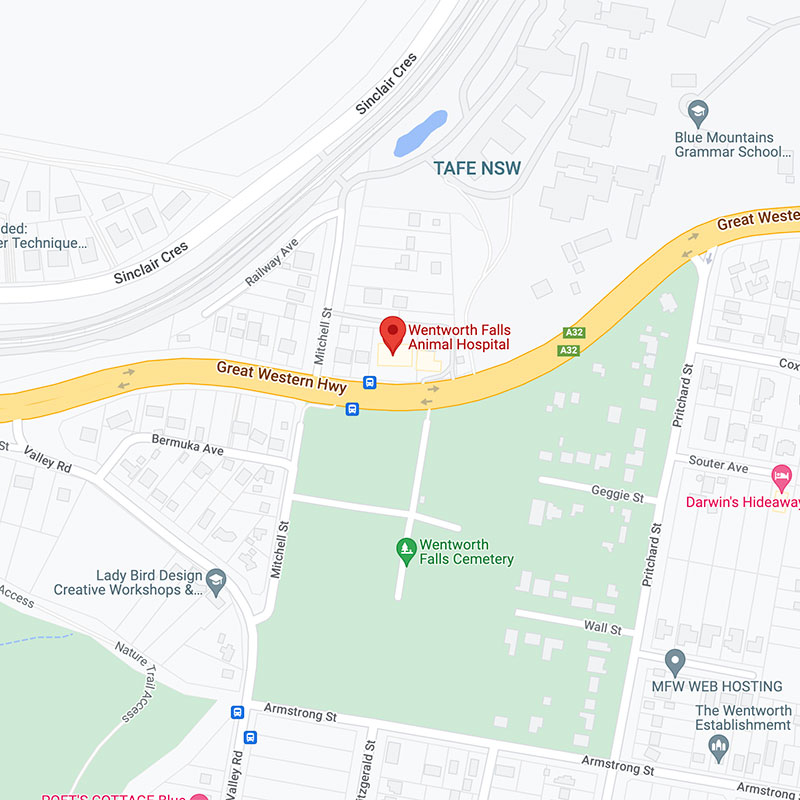
Wentworth Falls Animal Hospital
1/295-297 Great Western Hwy
(02) 4757 3255
fallsvet@commander360.com
| Monday | 8:30am-6pm |
| Tuesday | 8:30am-6pm |
| Wednesday | 8:30am-6pm |
| Thursday | 8:30am-6pm |
| Friday | 8:30am-6pm |
| Saturday | 9am-1pm |
| Sunday | Closed (available for emergencies only) |
If your pet needs urgent veterinary assistance, then Wentworth Falls Animal Hospital provides emergency care that operates from 8:00am to 6:00pm seven days a week.
If you contact the veterinary hospital between 6pm and 8am, all calls will be diverted to Nepean Animal Hospital who have a dedicated 24/7 emergency after-hours service, with on-site vets and nurses, covering the Blue Mountains region. Your pet will be cared for at Nepean Animal Hospital overnight and then may be brought back to our hospital the following day for continuing care.
Meanwhile, if your pet requires more specialist care or continuous overnight monitoring, the vet may recommend immediate transfer to a specialist centre.
Blue Mountains, Wentworth Falls, Katoomba, Leura, Bullaburra, Lawson, Hazelbrook, Woodford, Medlow Bath, Blackheath